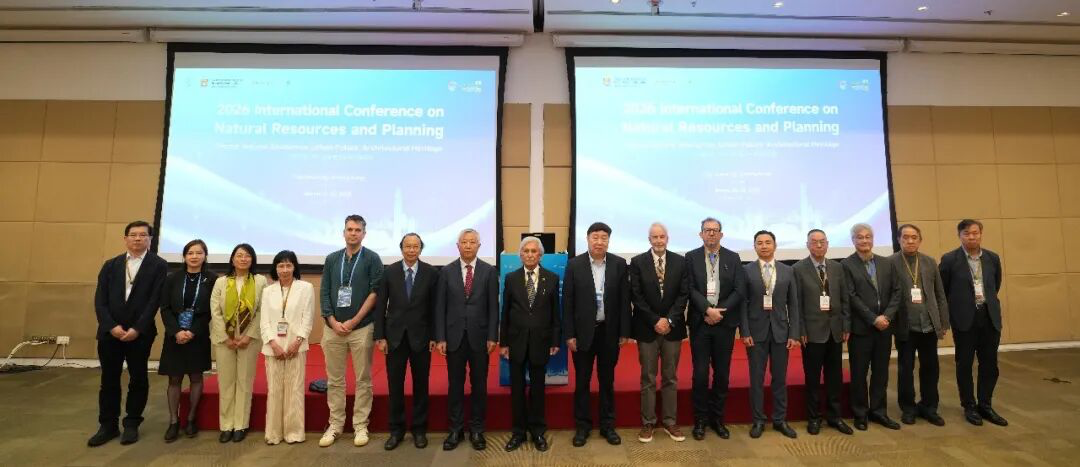
The 2026 International Conference on Natural Resources and Planning (ICNRP 2026) was successfully held recently at the University of Hong Kong. The conference was jointly organized by the International Association of Natural Resources (IAONR), the Urban Systems Institute, and the Faculty of Architecture (Departments of Urban Planning and Design and Geography) of the University of Hong Kong, with support from the Global Designers Association (GDA) and the YUANYE AWARDS International Competition Organizing Committee. The event brought together global expertise and established a high-level platform for international academic exchange and collaboration.
Two keynote sessions featured seven distinguished academicians and experts around the world. They focused on a range of cutting-edge fields, shared their latest research findings and practical experience, presented frontier developments in the global natural resources and eco-environment sectors, and offered important insights for advancing natural resource governance and urban sustainable development.
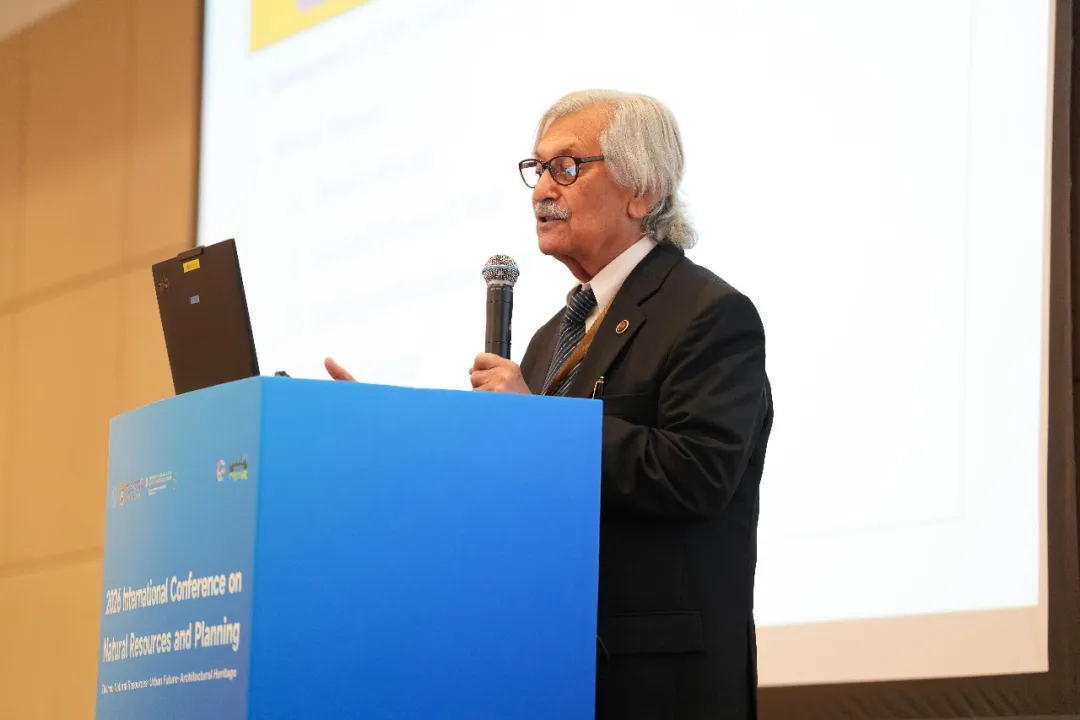
Professor M. Qasim Jan, President of iAONR and Foreign Member of the Chinese Academy of Sciences, shared the endowment characteristics and research progress of Pakistan’s earth science resources.
Professor Jan pointed out that Pakistan was generally considered to consist mainly of Cenozoic sedimentary basins and orogenic belts with low mineral resource potential at its inception in 1947. The early establishment of the Geological Survey of Pakistan and other geoscientific institutions, together with specialized programs offered at universities, continuously improved the number and professional competence of geoscience talents. Over more than seven decades, large-scale geological, geophysical (including airborne geophysical surveys), geochemical surveys, exploratory drilling, and oil and gas exploration efforts have dramatically transformed the country’s resource exploration landscape, and the discovery of a series of important mineral deposits has completely changed external perceptions. However, large areas of the country still await detailed exploration and research. At the same time, Pakistan has enormous renewable energy potential.
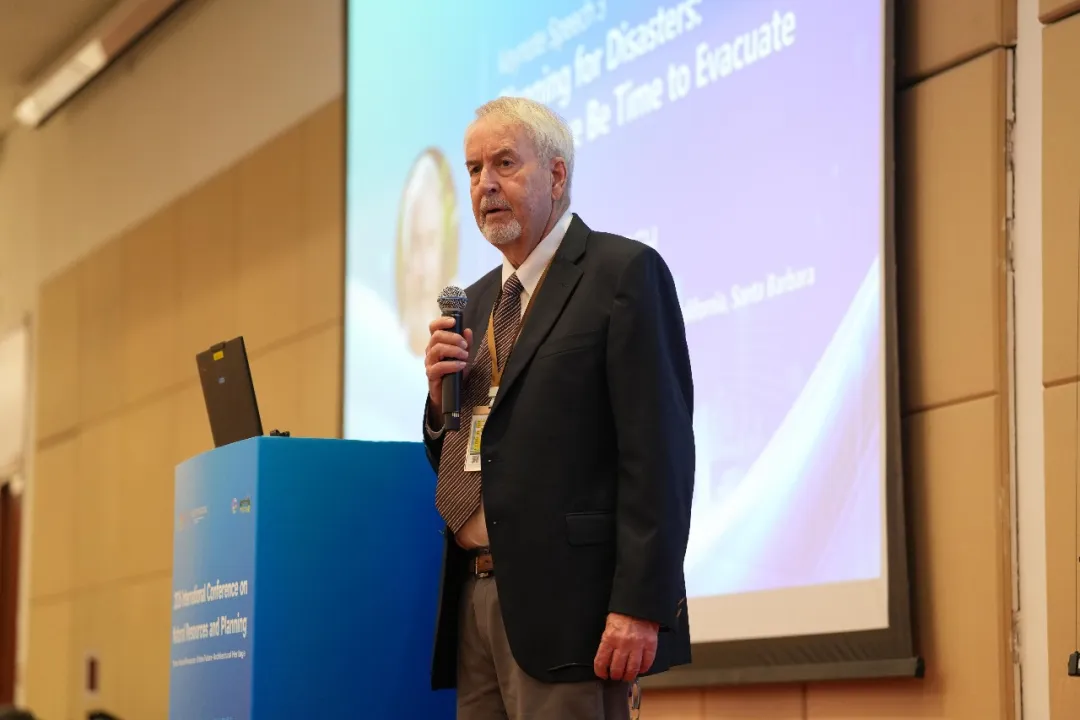
Professor Richard Church, fellow of the U.S. National Academy of Sciences, focused on disaster emergency response amid the increasing frequency of extreme weather events, and provided scientific support for improving emergency evacuation efficiency through empirical research.
Professor Church considered that extreme weather events worldwide are on the rise, including droughts, floods, hurricanes, and tornadoes. Planning, management, and policies that support efficient and orderly evacuation in high-hazard-risk areas are critical for saving lives and protecting property. A fundamental component is an estimation of the clearing time for evacuating an area. Evacuation modeling is essential in preparing for an emergency. This presentation introduces a new time-expanded spatially defined model tailored for evacuation modeling and offers comparisons to well-known micro-scale traffic simulation packages. A study of a high-fire-risk neighborhood in Santa Barbara, California is detailed.
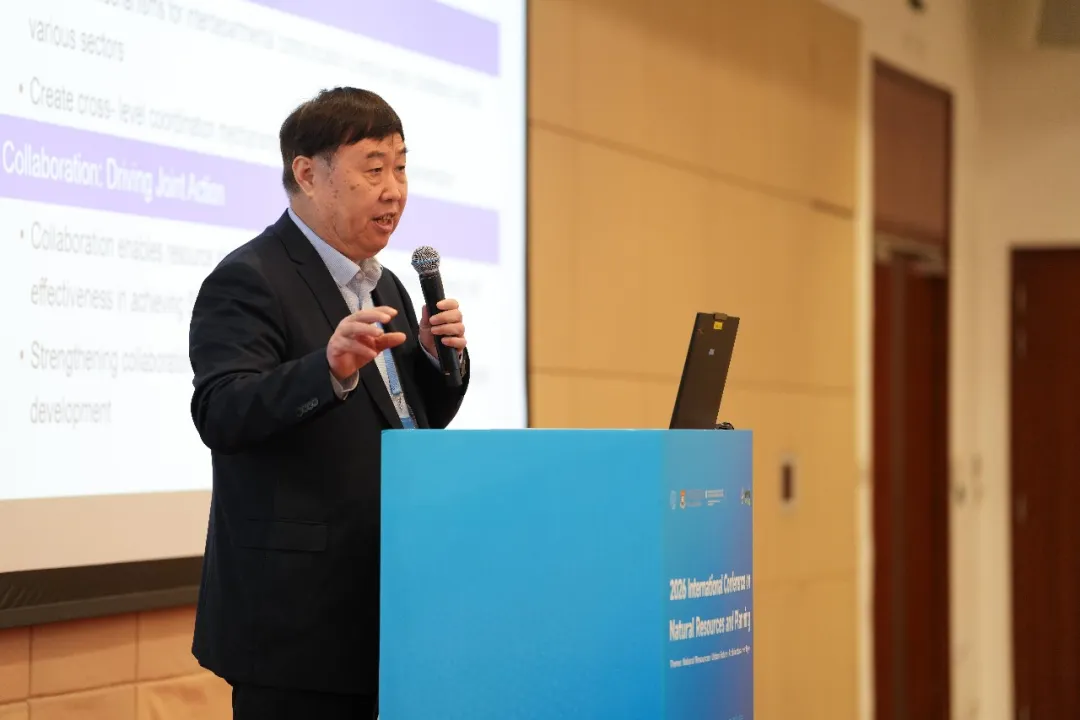
Professor Bojie Fu, academician of the Chinese Academy of Sciences, delivered a speech entitled as ‘The Roadmap and Local Practice for Sustainable Development’, systematically elaborating on the implementation pathways of sustainable development and practical experience at the local level.
Professor Fu highlighted that there is an urgent need to build an accelerated strategic framework featuring “classification, coordination and collaboration” so as to achieve the global Sustainable Development Goals (SDGs). Through in-depth analysis of typical Chinese cases, the speech presented local approaches to addressing regional resources and environmental issues: ecological restoration on the Loess Plateau has facilitated the transformation from environmental degradation to green development; the construction of coupled human–earth system models in the Yellow River Basin has provided a scientific basis for coordinated watershed governance. At present, challenges remain including regional imbalance, fragmented governance, and insufficient scientific and technological support. In the future, it is necessary to strengthen systematic governance, research on human–earth coupling, and empowerment by big data and AI technologies, so as to promote governance transformation and contribute Chinese wisdom and solutions to global sustainable development.
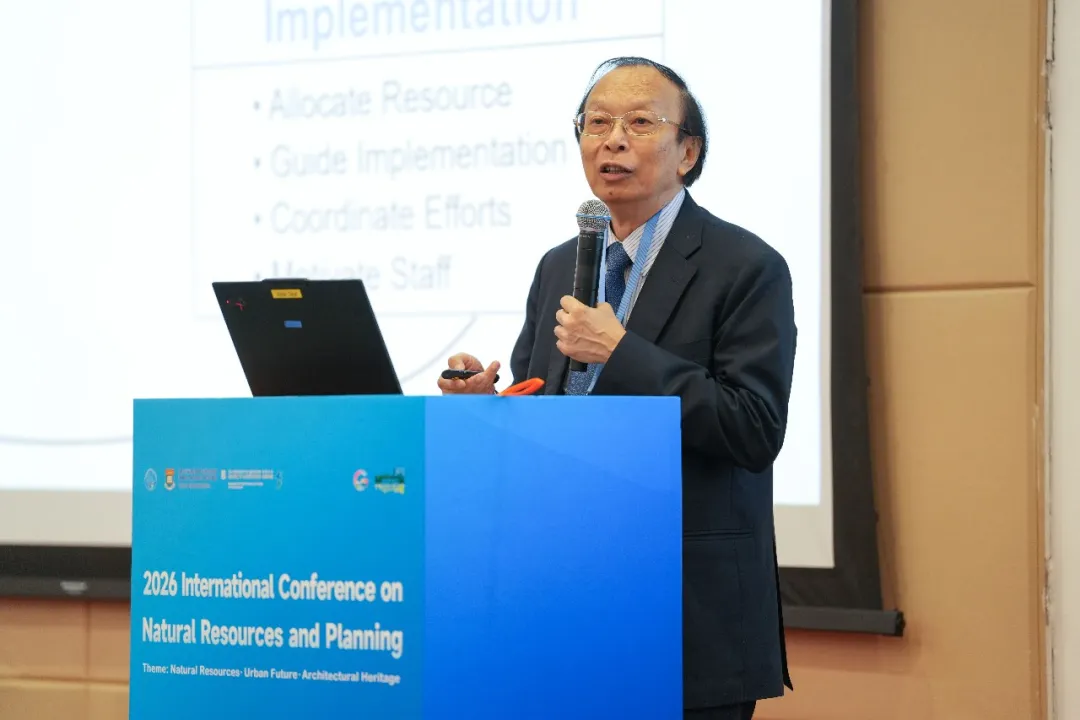
Professor Anthony G. O. Yeh, academician of the Chinese Academy of Sciences, focused on ‘Spatial-Temporal Analysis for Natural Resources Monitoring and Planning’, demonstrating the application value of cutting-edge technologies in the refined management of natural resources.
Professor Yeh considered that natural resources are characterized by significant spatial-temporal heterogeneity and dynamic evolution. Traditional static monitoring can hardly meet modern planning requirements, making it necessary to establish an integrated “space–air–ground” sensing system for spatial-temporal big data. In terms of core methodologies, a full-chain technical system featuring spatial-temporal change detection, process simulation, driving force analysis, and intelligent prediction has been formed on the basis of GIS, integrating multi-source remote sensing, the Internet of Things, and AI algorithms. In practices such as the Guangdong-Hong Kong-Macao Greater Bay Area development and territorial ecological restoration, these approaches have driven the transformation of resource management. In the future, it is necessary to further integrate spatial-temporal big data with AI, strengthen cross-scale collaborative analysis, and provide scientific and technological support for the sustainable utilization of natural resources and the modernization of territorial spatial governance.
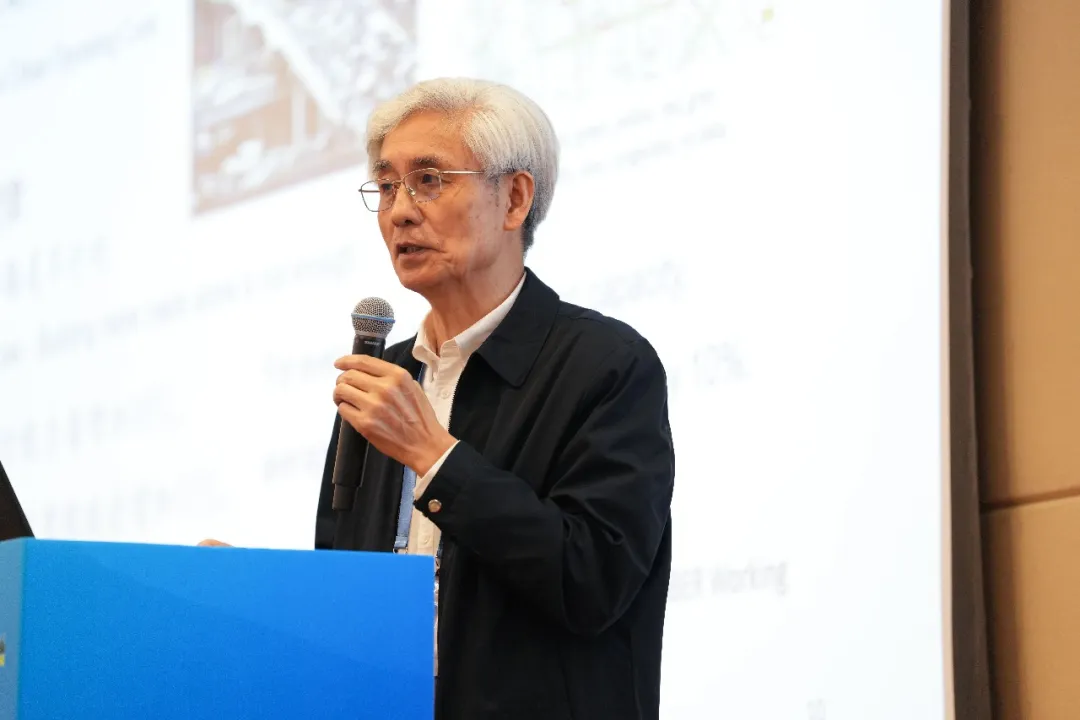
Professor Renzhong Guo, academician of the Chinese Academy of Engineering, focused on the topic of ‘Modernization of Natural Resource Management: Theoretical Innovation Leading Technological Progress’, and put forward a development direction where technological advancement should be guided by theoretical innovation.
Professor Guo thought that technological empowerment is the only way to achieve the modernization of governance systems and intelligent governance, but it also requires theoretical innovation—indeed, theoretical innovation must take the lead. Research methods need to keep pace with the times, and theoretical paradigms must also be reconstructed. Natural resource governance requires an in-depth understanding of the territorial spatial system and the construction of a corresponding theoretical system. The shift of natural resource management from sectoral management to integrated management presents certain contradictions with the current administrative governance system, so a balance must be sought and various relationships properly handled. New research should be conducted on the characteristics of modern urban development, and new theories should be proposed accordingly.Urban regeneration should also be based on new theoretical knowledge of urban social movement paradigms, rather than following outdated renewal models.
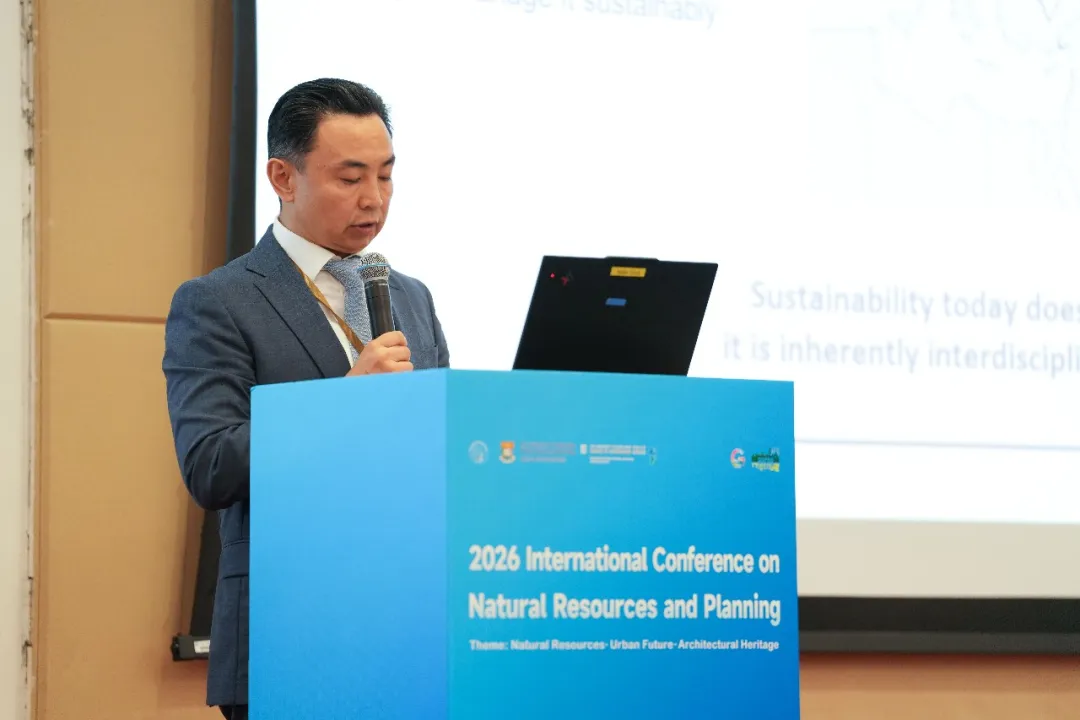
Professor Abay Serikkahanov, Vice President of the National Academy of Sciences of Kazakhstan, delivered a presentation on behalf of Professor Akhylbek Kurishbayev, President of the National Agricultural Research University and Vice President of the International Association of Natural Resources (iAONR). He proposed that sustainable development needs to break through industry and disciplinary limitations and strengthen proactive governance of natural resources.
Professor Serikkahanov emphasized that sustainable development is an interdisciplinary and territorially embedded paradigm that requires the deep integration of scientific knowledge and planning practices to develop effective and forward-looking solutions. Traditional planning approaches, largely grounded in inertia and retrospective trend analysis, are no longer sustainable, and governance must transition from after-the-fact management to predictive management. Through several examples, the speech introduced Kazakhstan’s ongoing transition from a reactive management model to predictive governance. For predictive governance to form a complete system, three fundamental conditions must be met: unified data standards and integrated digital environments, supporting infrastructure, and the cultivation of a new generation of interdisciplinary professionals. He also proposed an initiative to establish an international network for predictive natural resource governance.
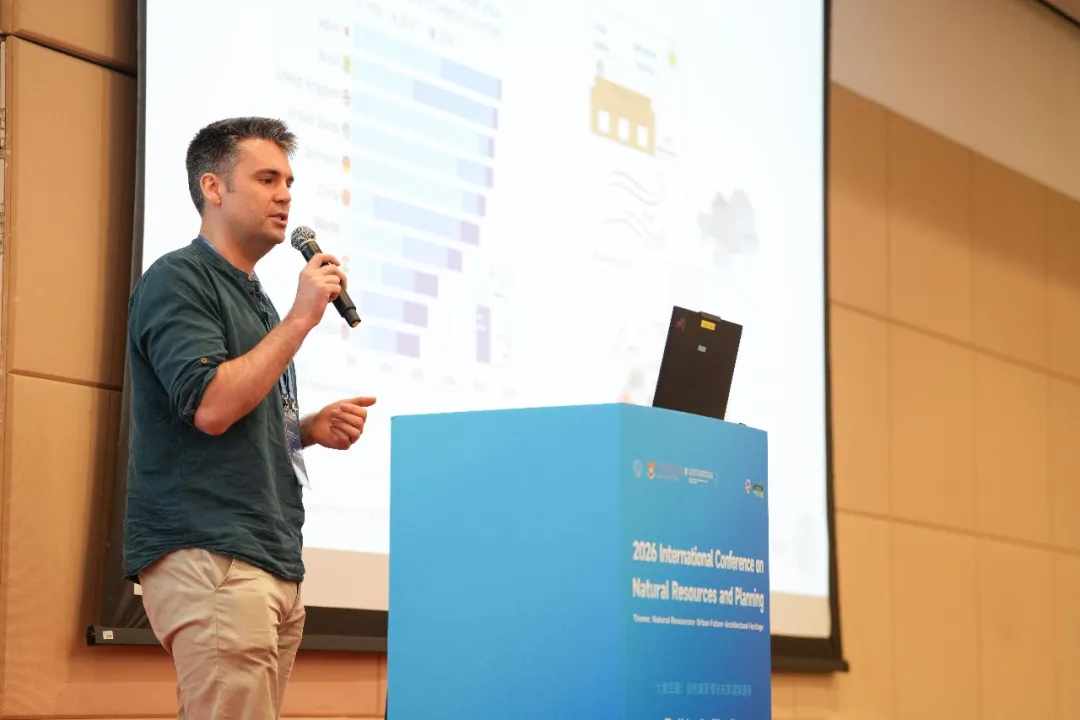
Professor Patrick Roberts of the Max Planck Institute of Geoanthropology of Germany, shared his presentation of ‘Interdisciplinary, Computational Approaches to Developing ‘Usable’ Urban Pasts’.
Professor Roberts thought that previous studies often defined cities based on specific features such as city walls and written records, leading to fragmented data and limited regional perspectives. To overcome this dilemma, his team designed and launched an open scientific computing platform with an innovative data model. Instead of treating cities as static coordinate points, the model views them as dynamic network centers composed of interconnected elements including roads, buildings, land use, and chronological information.
Researchers can quantitatively compare parameters such as urban population size, spatial structure, and environmental carrying capacity across time and space, revealing patterns of ancient cities in environmental adaptation, resource management, and social resilience. This provides references for contemporary sustainable urban planning, ecological restoration, and disaster response.