
A Nature Water study reveals spatial constraints on wastewater reuse and a lower-cost pathway towards hybrid infrastructure
Original Research
Shen, J., Shen, L., Zhong, S., Li, D. et al. “China’s centralized wastewater treatment system reaches efficiency limits in tackling water scarcity.” Nature Water (2026).
DOI: https://www.nature.com/articles/s44221-026-00727-5
Research Summary
Wastewater reuse is an important strategy for alleviating water scarcity. Yet as centralized wastewater treatment systems continue to expand, their economic viability and actual water-resource benefits are increasingly constrained by infrastructure location and scale, as well as by demand for reclaimed water. Using an infrastructure database covering 10,826 wastewater treatment plants across China, the study systematically assesses both the potential of centralized wastewater treatment to ease water scarcity and the limits of its economic efficiency. The findings reveal a clear geographical boundary: only about 450 million people live in areas where reclaimed-water reuse could both recover costs and meaningfully alleviate local water scarcity. Under prevailing wastewater treatment tariffs of CNY 0.9–1.1 per cubic metre, centralized plants would need a treatment scale of roughly 6,793–49,744 m³ per day to break even, depending on cost conditions. Compared with continued centralized-only expansion, a hybrid system combining centralized and decentralized treatment could reduce infrastructure investment costs by 25–37%. The study calls for a shift from capacity-led construction towards infrastructure planning that jointly considers spatial supply–demand alignment, economies of scale and water-security benefits.
Key Findings
- Approximately 450 million people live in areas where reclaimed-water reuse could both recover its costs and substantially ease local water scarcity.
- Under current tariff levels and the study’s cost assumptions, break-even operation requires centralized treatment scales of approximately 6,793–49,744 m³/day.
- Future climate change and urbanization are unlikely, by themselves, to eliminate the spatial and economic constraints identified in the study.
- A hybrid centralized–decentralized infrastructure pathway could lower investment costs by 25–37% relative to a centralized-only expansion strategy.
Research Findings
1. From Treatment Capacity to Water-Security Benefits: Why More Plants Do Not Necessarily Mean Less Water Scarcity
Over recent decades, centralized wastewater treatment systems (CWTSs) have become the dominant approach to wastewater management in China. But treating more wastewater does not necessarily mean that reclaimed water can be used where it is most urgently needed. Nor does an expansion of treatment capacity automatically translate into less water scarcity. The central issue is whether the places generating wastewater, the infrastructure treating it, and the areas needing alternative water supplies are effectively connected.
There are three main reasons for this disconnect. First, wastewater generation and water scarcity do not always coincide geographically. Wastewater tends to be produced in densely populated and industrialized areas, while severe scarcity may also occur in sparsely populated regions dominated by agricultural irrigation, where wastewater volumes are too small to support large centralized reuse systems. Second, treatment infrastructure is relatively long-lived, whereas migration, industrial restructuring and changes in water use can rapidly redistribute wastewater loads; facilities built for historical demand may therefore be poorly matched to present conditions. Third, reclaimed-water use depends on end-use requirements and local economics, including water quality, conveyance distances and prices. Even when wastewater is treated, the absence of stable, financially viable demand can prevent it from replacing freshwater in practice.
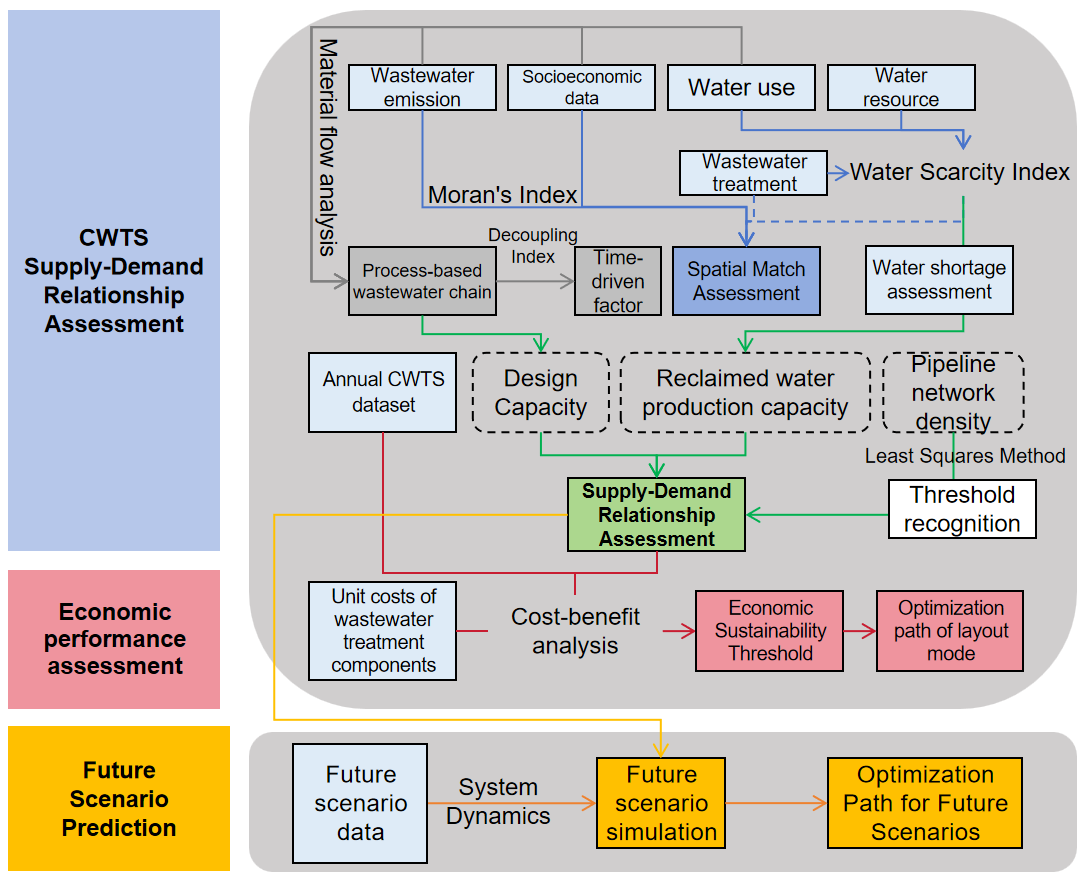
A meaningful assessment of centralized wastewater treatment must therefore go beyond how much wastewater plants can process. It must also establish where wastewater arises, how efficiently it can be collected, whether existing capacity matches that supply, where reclaimed water is needed and whether the infrastructure can recover its costs. To address these linked questions, the researchers developed a nationwide, process-based techno-economic framework for 10,826 wastewater treatment plants, connecting wastewater generation, collection, treatment, reuse and economic returns. Future socioeconomic scenarios were then used to examine how these relationships may evolve. The approach moves beyond treating wastewater volumes as a direct proxy for beneficial reuse and provides a way to evaluate where centralized infrastructure can deliver meaningful water-security gains.
2. Spatial Mismatch Between Wastewater Resources and Water Scarcity
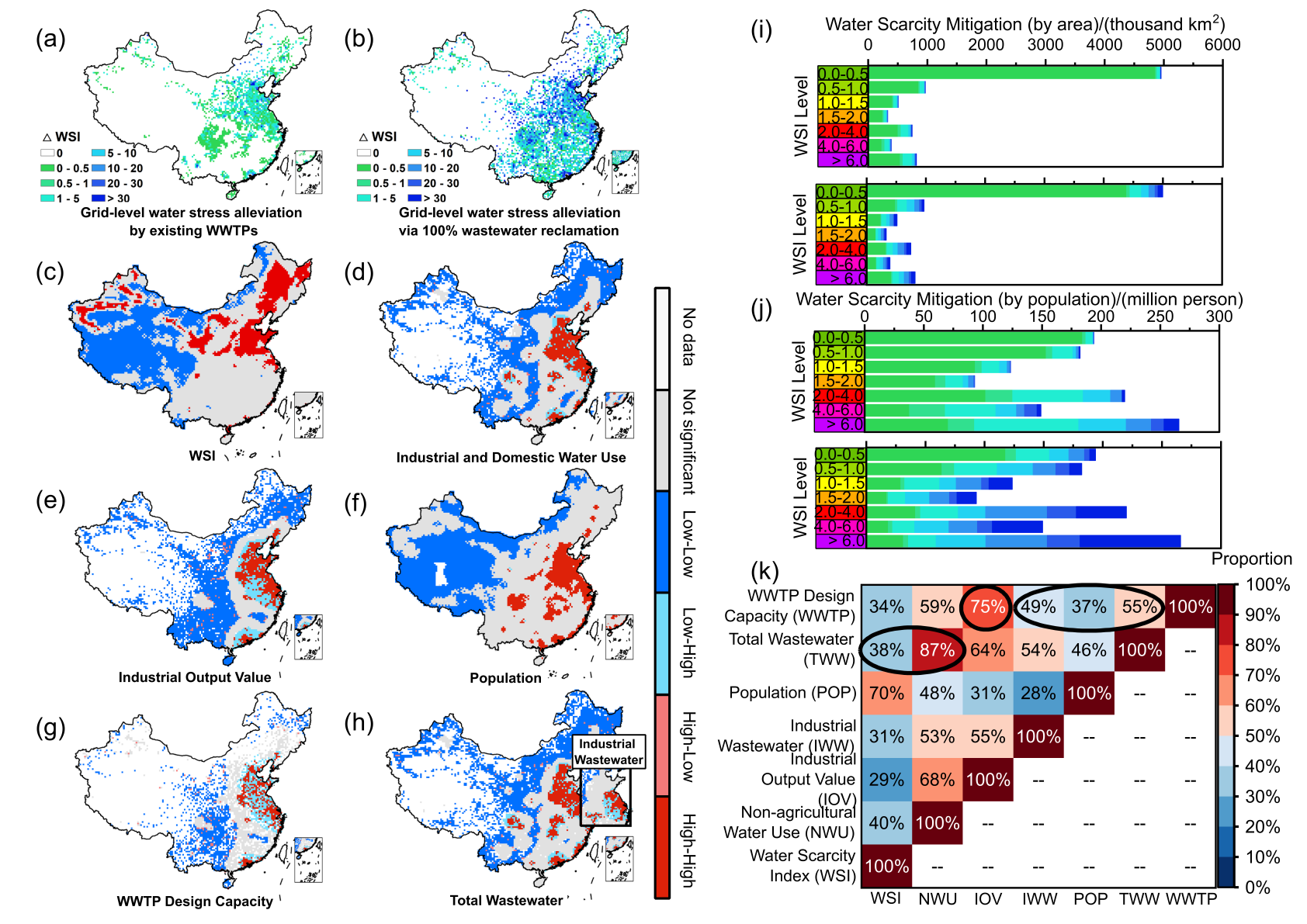
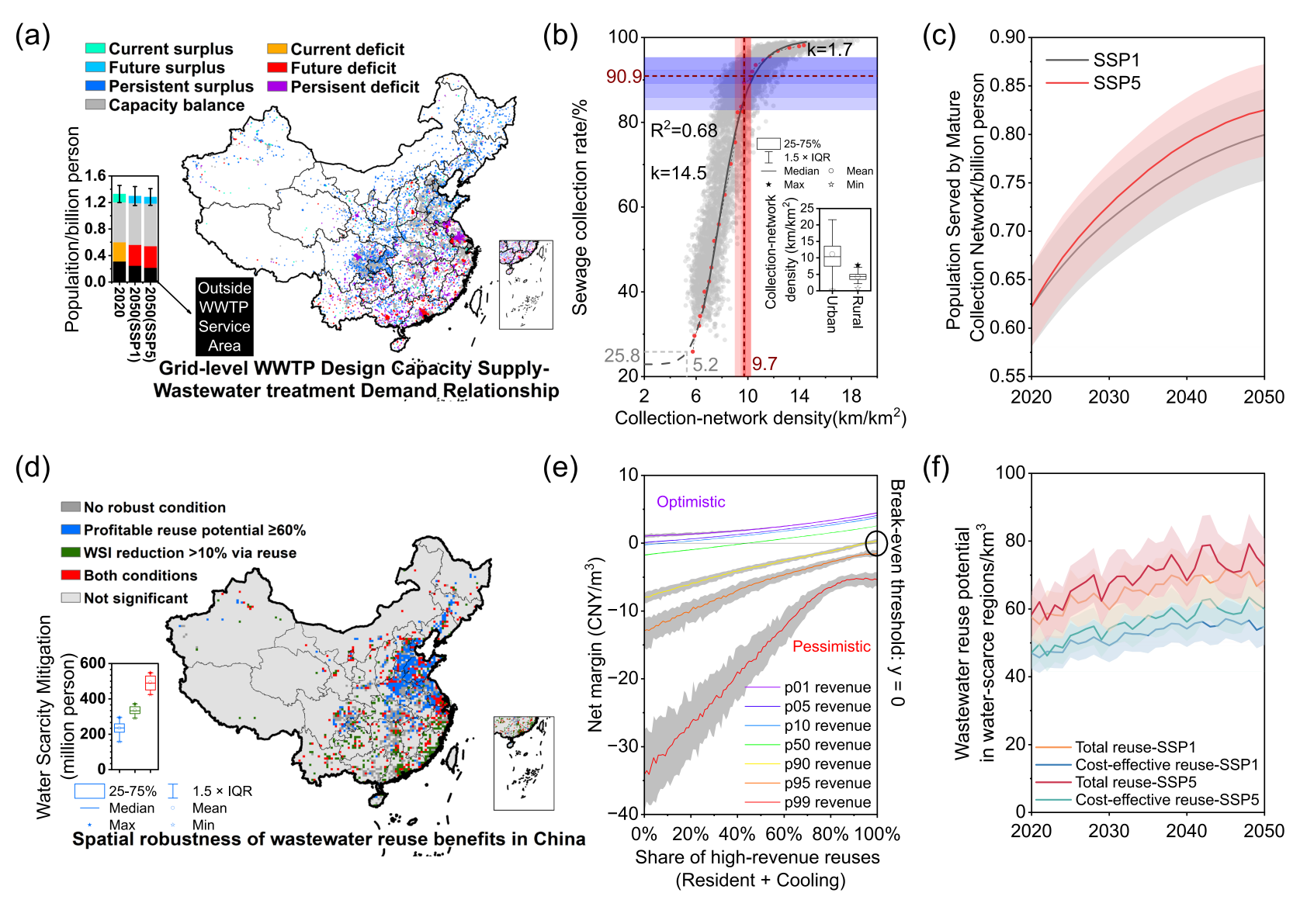
The water-security benefits of wastewater reuse are much more geographically limited than national wastewater volumes might suggest. Under actual reuse conditions in 2020, areas where the water scarcity index (WSI) improved by more than 10% covered only about 88.5 million people and 109,800 km² of land—approximately 6% of China’s population and 1% of its land area. These benefits were concentrated mainly in the Yellow and Haihe River basins. Even under the hypothetical assumption that all treated wastewater could be reused, the population living in areas with substantial scarcity relief would increase to only 513.4 million, and the corresponding area to 1.1054 million km².
The main explanation lies in the geographical mismatch between wastewater supply and water scarcity. Only 38% of the areas assessed showed spatial alignment between wastewater generation and the severity of water scarcity, whereas wastewater generation was aligned with non-agricultural water demand in 87% of areas. Wastewater supplies are therefore concentrated in relatively populous, industrialized areas with high non-agricultural water use. By contrast, some heavily water-stressed areas are agriculturally dominated and lack sufficient wastewater generation to support large-scale centralized reclamation.
The existing infrastructure network creates a second mismatch. The spatial distribution of wastewater treatment design capacity matched industrial output relatively closely, with 75% concordance, but the corresponding figures were only 37% for population, 49% for industrial wastewater generation and 55% for total wastewater generation. This suggests that the present distribution of centralized capacity still reflects historical industrial development rather than the current distribution of wastewater sources and demand.
Together, these findings reveal two spatial limits on centralized wastewater reuse: the mismatch between wastewater supply and water scarcity constrains its potential benefit, while the mismatch between treatment capacity and actual wastewater generation further restricts how much of that benefit can be realized. Infrastructure performance therefore needs to be assessed through the spatial relationship among wastewater generation, treatment capacity, replaceable water demand and water stress, rather than through aggregate capacity or reuse ratios alone.
3. Changing Wastewater Sources and Future Urbanization
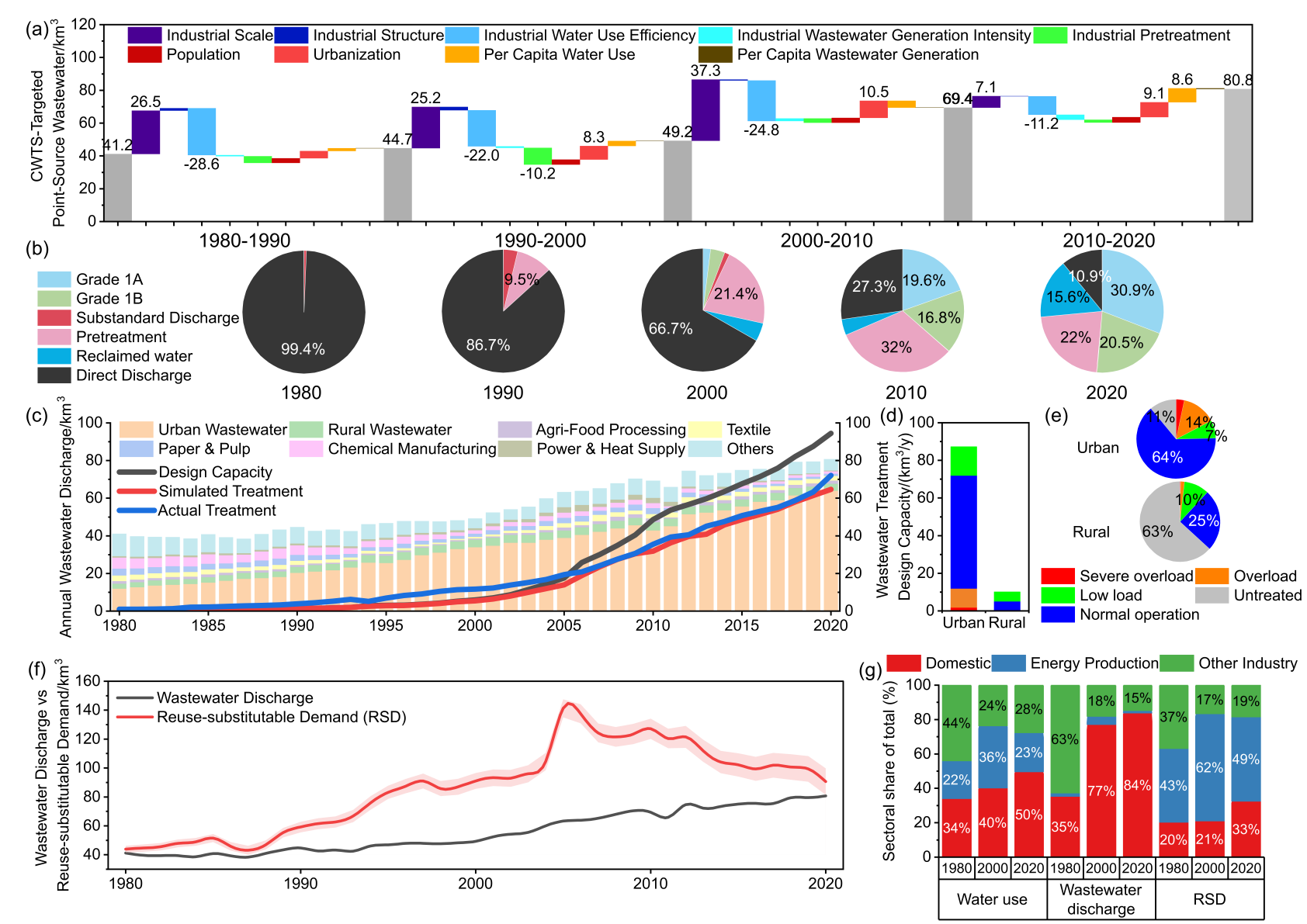
China’s infrastructure mismatches are closely linked to four decades of change in wastewater generation and treatment. The principal drivers have shifted from industrial expansion towards urbanization and rising domestic water use. By 2020, domestic wastewater accounted for 84% of total wastewater generation and had become the main source of demand for centralized treatment. Existing capacity has not fully adapted to this transition. Nationwide design capacity reached approximately 98.04 billion m³ per year in 2020, approaching total point-source wastewater discharge, yet actual treatment volumes remained below two-thirds of installed capacity. Roughly one-quarter of urban plants and nearly half of rural plants operated under low-load conditions, while about 15% of wastewater was treated by overloaded facilities. Meanwhile, approximately 63% of rural wastewater was discharged without adequate treatment.
This shift in wastewater sources has also reshaped the prospects for reclaimed-water use. Although domestic wastewater now dominates supply, substitutable domestic demand is largely confined to non-potable applications such as toilet flushing and municipal uses. Industrial cooling, in contrast, offers large, continuous and relatively stable demand. In 2020, substitutable domestic uses accounted for just 20–33% of non-agricultural water demand. The power-generation sector alone contributed approximately half of potentially substitutable reclaimed-water demand, with cooling responsible for around 95% of its water withdrawals. Thus, wastewater generation has become increasingly domestic, while economically attractive reuse demand remains concentrated in particular industrial activities and densely populated areas.
Urbanization may improve access to collection networks, but it is unlikely to resolve these geographical mismatches. By 2050, the population served by mature wastewater collection networks is projected to grow by approximately 100–200 million. Much of the additional wastewater, however, is expected to arise in eastern and southern coastal regions where treatment capacity is already under pressure. Excess capacity in parts of northern China is projected to persist, indicating that population growth and improved sewer access will not automatically redistribute treatment capacity towards the locations where it is most needed.
Future economic growth is also unlikely to expand the effective reach of wastewater reuse dramatically. The study estimates that approximately 56–71% of national wastewater generation could be reused in water-scarce regions while delivering both meaningful water-scarcity relief and economic sustainability. About 450 million people live in the areas where cost recovery and substantial scarcity relief could be achieved together, concentrated particularly in northern coastal regions. The findings suggest that the most viable sites for wastewater reuse will remain geographically concentrated rather than expanding uniformly with future development.
4. The Economic Scale Threshold for Centralized Wastewater Treatment
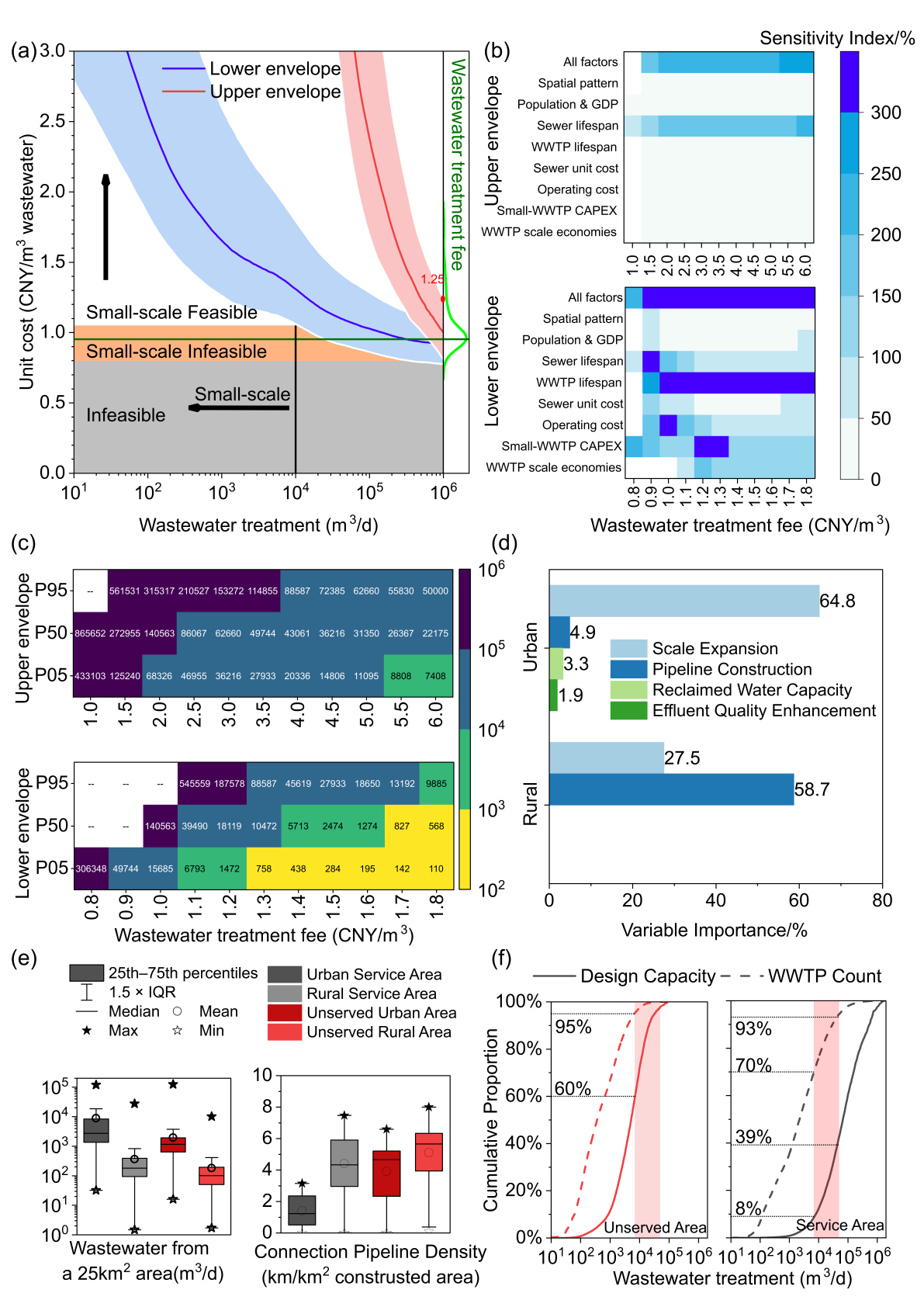
Financial viability presents an additional challenge to the continued expansion of centralized treatment. At a wastewater treatment tariff of CNY 0.8/m³, centralized plants generally cannot recover their costs under the conditions examined. Even at prevailing tariffs of approximately CNY 0.9–1.1/m³ in many Chinese cities, break-even operation is possible only for facilities with treatment capacities of roughly 6,793–49,744 m³/day, depending on the cost scenario. These figures describe a modelled range of economic viability, not a universal minimum design standard.
The drivers of infrastructure costs differ sharply between urban and rural areas. In cities, the scale of treatment plants is the primary determinant of investment costs, whereas in rural areas, sewer construction becomes the dominant component. Dense urban populations allow large wastewater volumes to be collected through relatively compact networks. Rural and other low-density settlements, by contrast, require longer pipelines to aggregate much smaller wastewater flows, driving up the cost per unit treated.
Across the cost and revenue scenarios examined, an estimated 70–93% of existing wastewater treatment plants face the risk of failing to recover their costs through the relevant charges, although these plants account for only 8–39% of total design capacity. This indicates that financial vulnerability is concentrated among numerous relatively small facilities. The challenge is even greater in areas not yet served by centralized treatment: approximately 95–99% of prospective new centralized plants would fall below the estimated economically viable scale threshold.
The findings do not imply that wastewater treatment is unnecessary where plants cannot pay for themselves. Pollution control and public-health benefits may still justify investment and public support. Rather, the economic thresholds provide a basis for identifying where centralized treatment is suitable and where decentralized facilities or alternative financing arrangements may offer more sustainable solutions.
5. A Hybrid Centralized–Decentralized Pathway: Meeting Wastewater Goals at Lower Cost
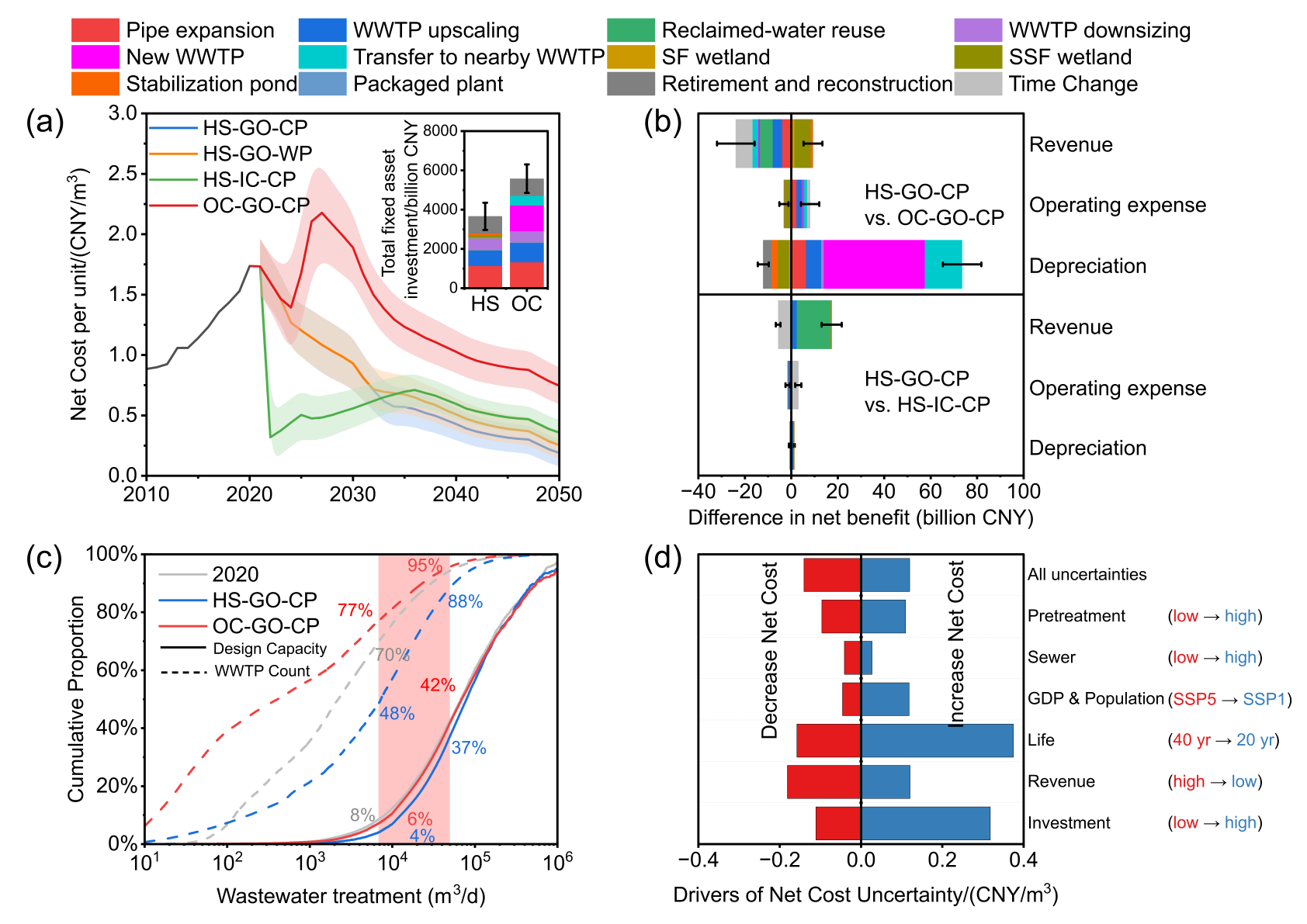
To address these spatial and economic constraints, the study compared two infrastructure pathways. The centralized-only pathway relies on new and expanded treatment plants and sewer networks to extend service coverage. The hybrid pathway retains or expands centralized plants where wastewater is concentrated, while introducing decentralized systems—including constructed wetlands and stabilization ponds—in dispersed areas where sewer connections are expensive. Drawing on Shared Socioeconomic Pathways (SSPs), alternative investment strategies and policy priorities, the researchers simulated the investments needed to meet national wastewater treatment and reuse targets by 2035 and maintain them through 2050. Under SSP1 and SSP5, centralized-only expansion would require approximately CNY 4.0–5.0 trillion in additional investment, including CNY 1.9–2.2 trillion for currently unserved areas. The hybrid pathway could meet the same goals at 25–37% lower total cost and reduce net treatment cost by CNY 0.30–0.96/m3 by 2050.
The principal savings come from changing how wastewater is collected and treated in low-density areas. Treating dispersed wastewater closer to where it is generated can eliminate the need for long sewers and small centralized plants operating below economic scale. The model indicates that this substitution could avoid approximately CNY 1 trillion in investment that would otherwise be directed towards additional centralized plants and their associated collection networks. Although decentralized facilities generally have shorter service lives, resulting in roughly CNY 3.5 billion in additional annual renewal costs, these costs remain smaller than the infrastructure expenditure avoided.
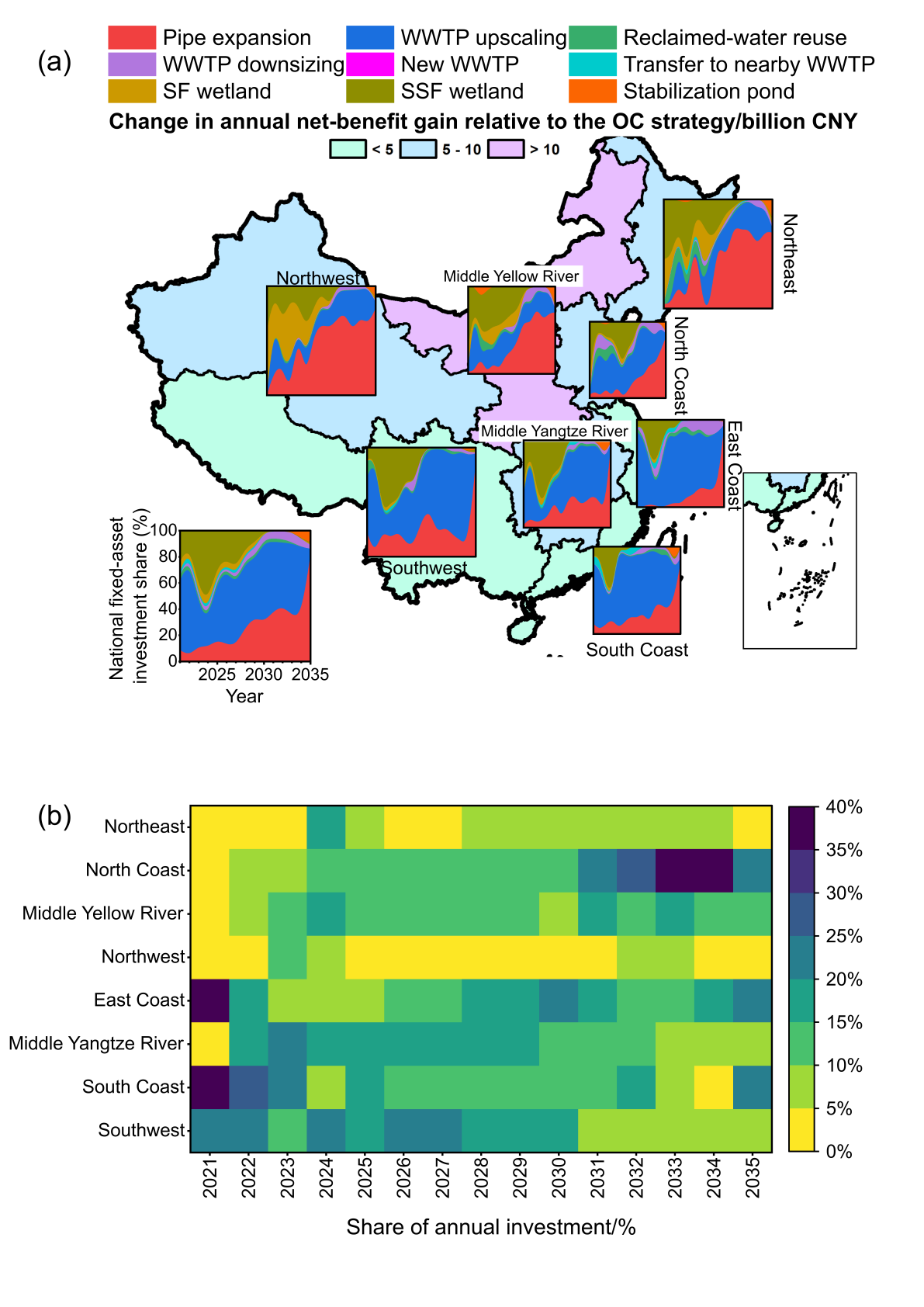
The researchers also simulated the optimal timing of regional infrastructure investment under a net-benefit-prioritized objective. During 2021–2022, most regions would focus on expanding treatment capacity to close existing service gaps. Between 2023 and 2025, a growing share of investment would go to decentralized systems, particularly subsurface-flow constructed wetlands. From 2026 to 2035, selected regions with sustained wastewater demand would gradually increase investment in sewer networks. Regional differences are substantial: in northern China, decentralized systems would account for more than 20% of annual investment throughout 2020–2027, whereas southern China would rely more heavily on centralized capacity expansion, which would exceed 30% of annual investment in most years outside the brief 2023–2025 rise in decentralized deployment. About 70–90% of total investment would be concentrated in southern regions and densely populated northern coastal areas, yet the largest economic gains from switching to hybrid systems would occur in northern China, where annual net benefits relative to centralized-only expansion would exceed CNY 6 billion.
Overall, the hybrid strategy does not replace centralized treatment everywhere. It enables different types and scales of infrastructure to be deployed according to local wastewater volumes, settlement patterns, sewer requirements and stable demand for reclaimed water. Its advantage lies in reducing the cost of extending service to areas that cannot economically support conventional centralized networks, while preserving the benefits of large plants where conditions remain favorable.
Conclusions and Policy Implications
1. Main Conclusion: The Efficiency Boundaries of Centralized Wastewater Treatment
The study’s central conclusion is that centralized wastewater treatment in China is approaching two distinct efficiency limits: its capacity to alleviate water scarcity and its ability to recover infrastructure costs. Geographical mismatches among wastewater generation, treatment capacity, water stress and reclaimed-water demand place a clear limit on where centralized reuse can deliver meaningful benefits. Only about 450 million people live in areas where such reuse could both recover costs and substantially ease local water scarcity. Meanwhile, economies of scale make cost recovery difficult in areas with low wastewater volumes or scattered settlements. At prevailing tariffs, centralized facilities require a break-even scale of approximately 6,793–49,744 m³/day, and extending conventional centralized systems beyond existing service areas would frequently fail to meet this threshold.
The challenge for China’s wastewater sector is therefore shifting from simply increasing treatment capacity to identifying the right locations, technologies and operating scales through which water-security benefits and economic sustainability can be achieved together.
2. Policy Implications: From Uniform Expansion to Locally Adapted Hybrid Planning
First, wastewater treatment and reuse planning should move from an emphasis on aggregate capacity towards matching local supply and demand. Treatment capacity, treatment rates and reuse rates alone do not establish whether a system will reduce local water scarcity. Planners should jointly evaluate wastewater generation, collection infrastructure, reclaimed-water demand and water stress, and prioritize reuse where it can provide substantial freshwater substitution.
Second, centralized plants should be assessed against locally relevant economic-scale thresholds. Preliminary feasibility screening for new or expanded facilities should account for regional settlement patterns, wastewater volumes, construction costs and likely operating conditions, rather than relying solely on targets for infrastructure coverage.
Third, centralized and decentralized systems should be planned as complementary infrastructure. Centralized facilities remain appropriate in urban and industrial concentrations with substantial wastewater flows and reliable demand for reclaimed water. In dispersed settlements where sewer construction is expensive, decentralized alternatives should be selected according to effluent quality requirements, land availability and long-term operation and maintenance capacity.
Fourth, long-term investment decisions must account for demographic and industrial change. Wastewater treatment assets have long service lives, but migration, structural economic shifts and changes in water-use efficiency can alter demand during those lifetimes. Phased, modular and adaptable construction strategies informed by population and industry projections can reduce the risk of persistent underutilization.
3. Contributions, Limitations and Future Research
The study’s principal methodological contribution is a nationwide framework that connects wastewater generation, infrastructure operation, reclaimed-water demand, water scarcity and economic costs. Rather than inferring reuse benefits directly from treatment volumes or installed capacity, it identifies the geographical mismatch between wastewater resources, existing facilities and water stress. It also characterizes the nonlinear relationship between sewer-network density and collection efficiency, helping link the physical expansion of collection systems to actual service performance. By integrating economies of scale, sewer costs and tariff-based revenues, the analysis establishes the economic feasibility boundaries of centralized wastewater treatment. Finally, it extends infrastructure planning beyond centralized-only expansion to hybrid configurations and compares their costs and benefits across future socioeconomic conditions and investment strategies.
Important limitations remain. Wastewater collection and treatment costs vary with topography, road networks, settlement patterns, local construction prices and management capacity. Higher-resolution spatial data could improve estimates of sewer requirements and facility locations. Future work could also better integrate dynamic investment, asset renewal, infrastructure retirement and technology upgrades. In addition, infrastructure transitions affect energy consumption, greenhouse gas emissions, pollutant removal and ecological risks as well as financial and water-resource outcomes. Incorporating energy and carbon constraints into technology selection, reclaimed-water allocation and spatial planning would enable a broader, multi-objective assessment of wastewater systems.
Closing Perspective
Wastewater reclamation is not merely a technical process of turning used water into a new supply. It is also a spatial coordination challenge involving wastewater resources, infrastructure networks, regional water demand and economic conditions. By placing centralized and decentralized systems where each is most appropriate—and planning wastewater treatment, reuse and water management together—countries can reduce unnecessary infrastructure expenditure while pursuing both pollution-control and water-security objectives. The results offer a pathway towards wastewater services that are more cost-effective, adaptable and sustainable.